Guide
You are winning more contracts for branding and decorating commercial spaces, yet after paying your crew the margin left in your pocket is a fraction of what you planned. Expanding the team drives costs up faster than revenue, and finding reliable tradespeople takes weeks of searching.
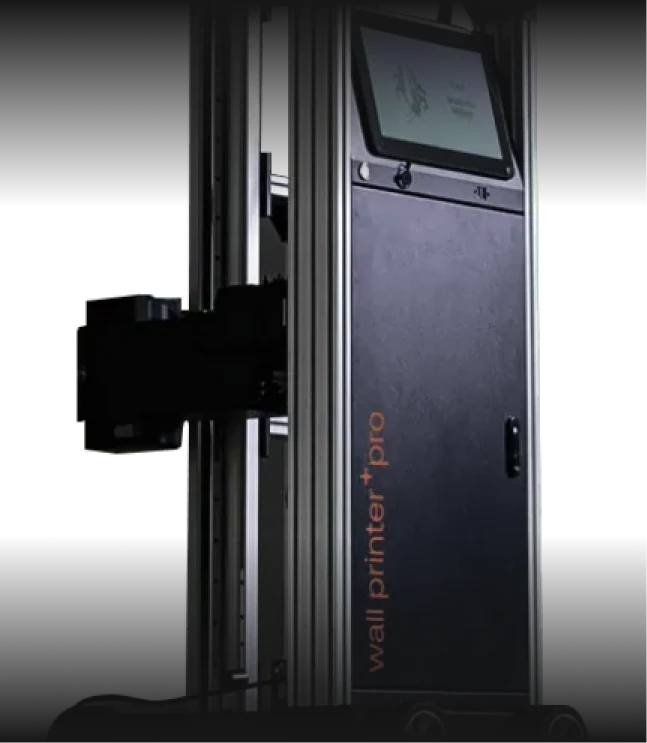
Here is how to grow a finishing company without the payroll growing with it. Wall printing lets a single operator deliver a project that traditionally requires three or four workers. The device transfers the image directly onto the wall and cures it on the spot. You scale with equipment instead of headcount and keep the margin that staffing costs currently eat.
Where Your Margin Actually Disappears
You sign a contract, celebrate the new project, then open the spreadsheet and start listing wages, fuel, materials and insurance. The total climbs with every line, and your margin shrinks proportionally.
When contracts multiply, hiring more people feels like the natural move. The problem is that revenue grows in proportion to headcount while the time and money spent on management, logistics and coordination consume an ever larger share of what you earn. Every additional person on the crew is not just another salary but also the hours you spend organising their work instead of earning.
Traditional wall decoration methods make this worse because they demand several people working at the same time. Vinyl wrap needs two or three pairs of hands to apply precisely, and wallpaper has to be matched at every seam.
The Overheads That Eat Your Profit
The salary of an experienced finishing tradesperson is just the starting point. Once you add employer contributions, a company vehicle, tools, workwear and safety training, the total cost of one employee runs significantly higher than the base wage every single month.
On large commercial projects you send a minimum of three people to a single location, which means the monthly cost of that crew reaches serious figures before the contract generates its first invoice.
How to Deliver a Large Project with One Person
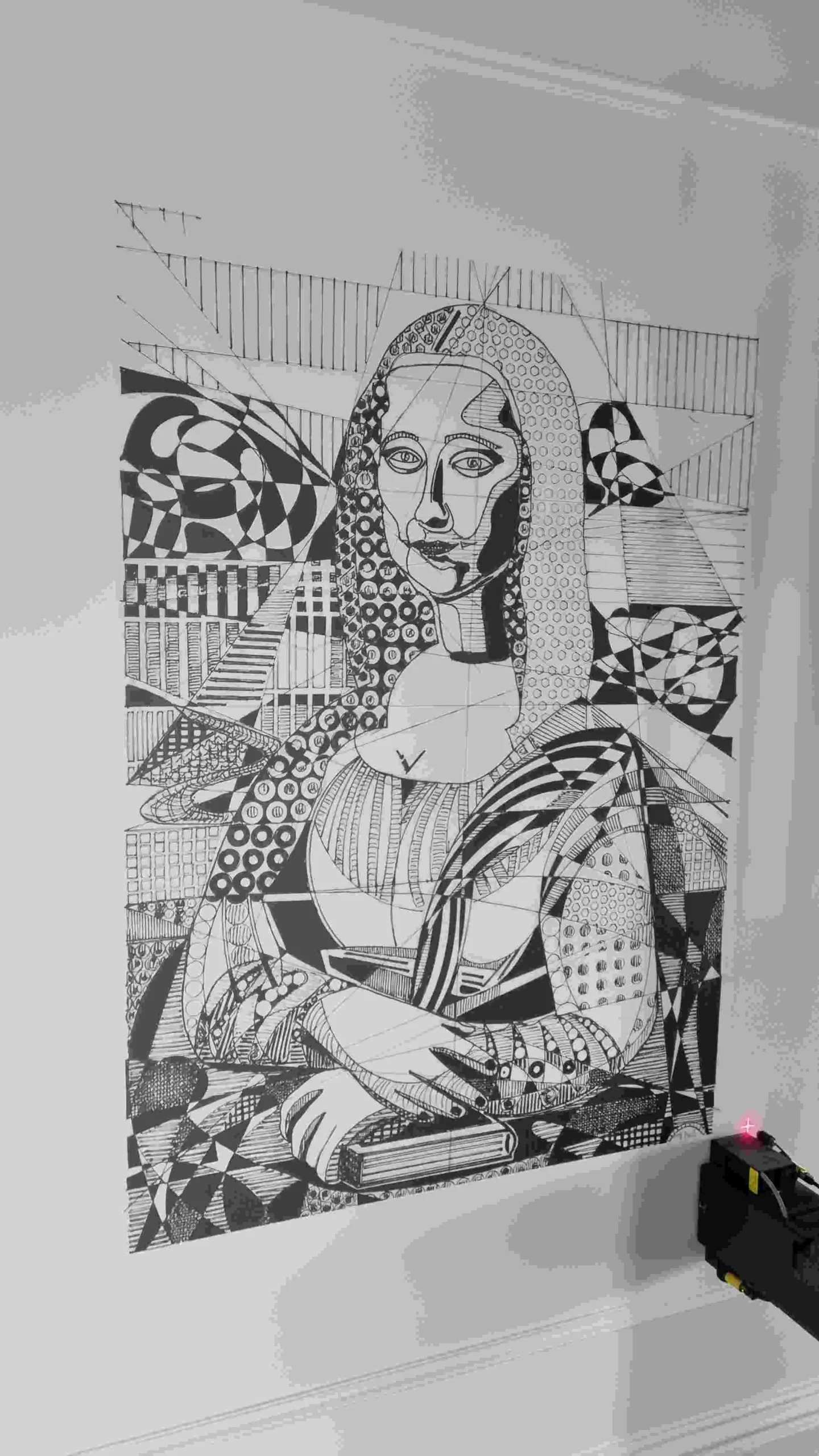
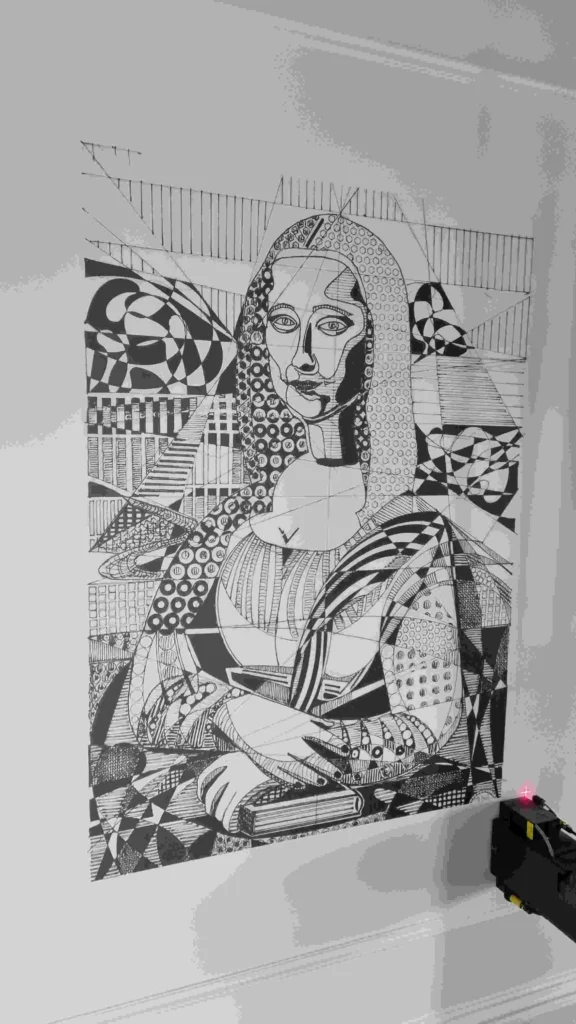
A wall printer transfers the image directly onto the surface and cures it with UV lamps during the print, so the result is durable, precise and ready to use the moment the job is done. The wall stays smooth and evenly covered, and the edges hold firm for years.
What does that mean for your business? Even a complex project can be completed by one person equipped with the right machine. Leasing keeps the monthly commitment well below the cost of a single employee, and the device starts paying for itself from the first billable project.
Anyone on your existing crew can operate the printer, including someone who until now worked as an assistant. After a short training session your team member independently manages the entire process, from surface preparation to the finished print on the client’s wall.
Working Conditions That Actually Retain People
The younger generation is increasingly reluctant to choose trades that involve daily exposure to dust and constant ladder work, because the physical toll drives people away after a few seasons. Wall printing offers an entirely different environment that changes how the job is perceived.
The operator works at floor level and avoids contact with dust, which removes the biggest drawback of traditional finishing work. The machine handles the precision work according to the design file, so the person controls the process rather than performing heavy manual installation. The workspace stays clean and organised, and the finished result is visible the moment printing ends. Colours retain full saturation, and detail reproduction reaches below a millimetre, so the outcome matches the designer’s visualisation exactly.
In that kind of environment, finding and keeping skilled people becomes far easier because you offer access to modern technology instead of heavy manual labour. That argument builds team loyalty for longer than a single seasonal contract.
Four Locations a Day with the Same Crew
Step back and compare two scenarios. Today your four-person team spends an entire day wrapping a single office. With wall printers, the same headcount covers several sites simultaneously because each of your people runs a project independently with their own machine.
Output multiplies while payroll stays the same, and every additional device opens the possibility of servicing another location on the same day. The advantage appears when your revenue comes directly from the capacity of your equipment rather than from how many people you manage to assemble for a given week. That is the point where you stop chasing the market and start setting the terms. As a finishing company, you increase the number of contracts you handle without a proportional rise in staffing.
You can offer visual identity solutions in spaces where people spend their working day and deliver them in a way that barely disturbs the surroundings. Printing runs quietly, without adhesive substances and their smell, and the floor stays clean throughout the entire job.
Summary
Equipping your people with the right tools lets your company operate more efficiently and protect margins even in a tough market. Instead of fighting rising payroll costs, invest in a solution that costs less than a single position yet replaces a multi-person crew. A wall printer from wall printers⁺ gives one operator the ability to run projects that traditionally demand an entire team, while you deliver quality unachievable by hand and charge premium rates that match it.
Frequently Asked Questions
What surfaces are suitable for wall printing?
The technology works on plaster, concrete, brick, plasterboard, wallpaper, wood and many other substrates. Before starting, you simply need to confirm the wall is clean, dry and stable.
How long does a wall print last?
UV ink maintains durability for up to eight years indoors. Colours do not fade under everyday use, and the image holds to the surface for the entire period.
Do I need artistic skills to operate a wall printer?
No. The device is designed so that one person can handle it independently. You can commission designs from external designers or use ready-made image libraries.
Does a wall printer require regular maintenance?
Upkeep is limited to cleaning the printhead and checking ink levels, tasks that take a few minutes. If an issue arises, the service team diagnoses the problem remotely and replacement parts arrive within 24 hours from the European warehouse.
What warranty comes with the printer?
The machine is covered by a 24-month warranty, and technical support remains free and available indefinitely.
Can wall printing be combined with other finishing services?
Absolutely. Wall printing complements the offering of companies working in finishing, signage or event production. You can propose it to existing clients as an additional option, and the working time allows you to run prints alongside other jobs on the same project.
Not sure if this business is for you? Want to know the details or get started right away?
Discover the collaboration opportunities available to you and learn how to get started—even if you lack capital, a business of your own, experience, or prior knowledge. We will teach you everything.
See more
Blog
Explore our resources
Have a look through our knowledge base. We’ve put together articles, videos and answers to the questions people ask most before getting into wall printing.
Our process
Discover our collaboration process
Take the first step and we’ll do the rest
Send the form and we’ll email you our price list straight away, with all the packages and what’s included. One of our advisers will be in touch within one working day. No hard sell, just answers to your questions.

Your data is safe
Step 1: Choose your location
Step 2: Fill out the form