


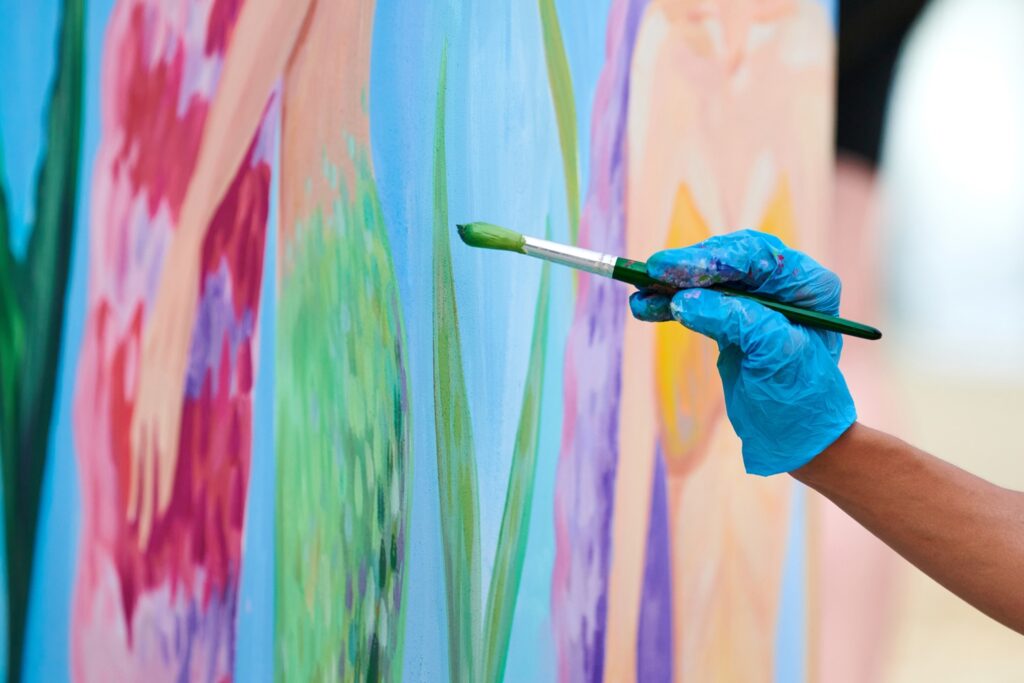
Will Wall Printers Replace Muralists and Graphic Designers?
How Are Wall Printers Changing the Mural Art Industry?
A wall printer is a technological revolution entering a space previously dominated by artists using brushes and paint. This device allows high-resolution images to be applied to vertical surfaces using advanced inkjet or laser technology. As a result, it is now possible to create murals with impressive precision and complexity—projects that used to take muralists days or even weeks to complete.
The change brought by the wall printer is not just about speed but also about making large-scale art more accessible. Companies, architects, and even private individuals can now order high-quality murals without the lengthy artistic process. But is this technological leap the dawn of a new art era, or does it threaten traditional muralists?
Is an Artist Still Needed, or Is AI and a Graphic File Enough?
A wall printer can operate using ready-made graphic files, meaning it can replicate almost any image without involving an artist. When combined with artificial intelligence tools capable of generating unique designs based on machine learning algorithms, a critical question arises: is a human creator still necessary?
The answer is more complex than it seems. A wall printer is merely an executor, not a creator. While it can replicate intricate patterns with great accuracy, it lacks the ability to adapt, interpret, and experiment. Art isn’t just about precision—it’s also about emotion, context, history, and conscious decisions about every line and color. Therefore, despite technological advancements, the role of the artist remains crucial—they give the mural a soul, something a machine will never fully replicate.
Examples of Printed Murals vs. Hand-Painted Masterpieces
To better illustrate the difference between machine-generated murals and those created by human hands, let’s look at some real-world examples.
In recent years, wall printers have been used to create large-scale graphics in public spaces. A great example is an advertising mural in Warsaw, near Politechnika metro station, created by Canon, which combined 3D elements and LED lighting. This demonstrates how technology can complement traditional forms of street art.
On the other hand, we have hand-painted masterpieces, such as Diego Rivera’s frescoes in Mexico’s National Palace or Banksy’s monumental murals. While their creation takes much longer, every brushstroke is the result of an artist’s personal decision, unique style, and emotions conveyed to the viewer.
A wall printer can perfectly reproduce a pattern, but it lacks the unpredictability and spontaneity that are fundamental to creative art.
Is a Wall Printer Just a Tool, or Can It Truly Dethrone Traditional Artists?
While a wall printer is an exciting tool that allows for fast and precise mural production, it cannot replace muralists and graphic designers. It is a technological enhancement, not a substitute for human creativity.
In the future, we may see greater integration of wall printing with AI, leading to increasingly sophisticated designs. However, it will always be humans who decide what to create and how to present it. After all, art is not just about technique—it’s about storytelling, something only the human mind can truly master.
A wall printer is not a threat to artists—it is a tool that can support them, but never replace them. Technology can be an ally of art, but its essence will always remain human.
Looking for Stunning Graphics in Your Space?
If you’re considering wall printing for your project, be sure to visit wall tattoo.

