

Guide

Burnout in the finishing and renovation trades rarely hits overnight. It usually starts with things that are easy to put down to being tired: client conversations that keep getting harder, evenings spent working, or an ache you’ve learned to live with. For a long time you can tell yourself this marathon is just ambition and commitment. The trouble is, running flat out eventually starts to hurt the business itself. When your energy is low, precision slips, costly redos creep in, and dealing with people becomes a constant source of friction.
Instead of growing, the business gets stuck putting out fires. And it all lands on your shoulders, because as the owner you’re the tradesperson, the manager and the bookkeeper rolled into one. Feel like you’ve hit a wall? That’s a natural sign your current way of working has simply run its course.
5 signs of burnout for finishing contractors

Below are five signs that the way you run your business may be wearing you down. See how many of them sound like your everyday life.
Sign 1: Clients are starting to get on your nerves
“Any chance of a discount?” “Could you just touch up this bit?” Comments like these used to be part of the job. Now one more request is enough to make you snap. You feel the client doesn’t see how much work you put in, while their demands keep growing. Sometimes a conversation turns into an argument, and in extreme cases someone threatens to sue. Dealing with clients like this can weigh on you more than the work itself.
Do you find yourself putting off calls, replying grudgingly, or assuming from the start that the client won’t be happy? That’s a sign the tension is spilling over into your relationships with the people you work for.
Sign 2: You can’t switch off
It’s your day off, but you’re still checking your phone. You take on another job just in case, because you don’t know what the coming weeks will bring. Seasonality, worries that the boom is ending and clients pulling out over price make it hard to say: that’s enough for today.
You’re constantly juggling the calendar in your head. Even when you’re resting, you’re wondering whether there’ll be work next month. And when every empty slot makes you anxious, the business is taking up not just your time but all the space in your head.
Sign 3: You’re doing the work of two
You’re short-handed, and hiring someone means higher costs and new risks. You don’t know if you’ll find the right person, and training them takes time too. So you tell yourself: it’s quicker if I do it myself. And the tasks keep piling up. You’re on site, chasing deadlines, answering the phone and trying to stay on top of everything around the job.
Even if you have a team, it’s hard to hand work over because you worry about redos or delays. Over time, the business depends more and more on you being there. You can’t ease off, because there’s nobody to take over.
Sign 4: Growth is coming at your expense
There’s no shortage of work, but every new job means getting home later, another Saturday on site or less time with your family. More jobs, but not necessarily more freedom. The calendar is full, yet there’s hardly any room in it for you.
If growing your business takes more and more of your time, it’s growing at your expense.
Sign 5: Your body is sending you the bill
After a full day, your knees or back are aching. You wake up tired, and by evening you’ve got no energy for anything but rest. You start to wonder: how long can I keep this up? Hard, dirty physical work takes a real toll.
Still, it’s easy to write off pain and exhaustion as part of running a business – especially when jobs are waiting and every day off means less income.
Burnout? Sometimes the problem is the business model
If these signs sound familiar, it’s because you’ve built your business with huge commitment. For a long time you’ve been giving 200%, and nobody can keep up that pace forever.
Burnout tends to get worse when:
- your income depends mainly on your own labour,
- the business can’t run without you there all the time,
- seasonality swings you between too much work and uncertainty,
- fixed costs still need paying in quieter months,
- you’re responsible for delivery, sales, people and finances all at once,
- growth mostly means hiring more people,
- you have no second income stream or financial cushion.
In a setup like this, more jobs don’t mean more independence. Sometimes they just mean more calls, more people and more decisions. That’s why it’s worth taking a wider view of your business: not just how many jobs you take on, but how you deliver them, where your income comes from and which clients you reach.
A break isn’t enough if you go back to the same grind
Rest is essential to recharge. But on its own, it won’t change the day-to-day reality that causes the stress. If you come back from holiday to the same overtime and the same to-do list, the problem will soon be back.
To break the cycle, ask yourself a few honest questions. How much of your time goes on tasks someone else could do? Which services bring the highest margin for the least effort? And finally, what could you add to your offer to become less dependent on the season and build your business on more than one pillar?
Because change isn’t about cramming more into an already packed schedule. The trick is to create a service built on a simpler model – one that brings in new clients without your team having to firefight and go all-out.
A solution that could change the way you work

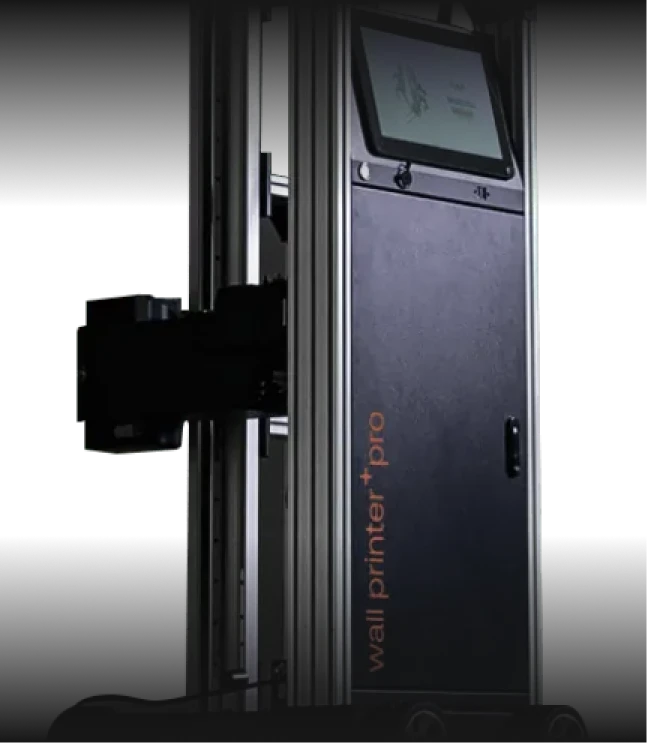
Wall printing could be the right direction. It’s a service that lets you complete jobs more efficiently and with less physical effort. Most importantly, managed well, it gives your business an extra source of income.
New to it? Start with our article that breaks the technology and what it can do down step by step: How does wall printing work?
We know a new service raises new questions: how to price it, how to sell it and what to do when something goes wrong. You won’t be on your own. Along with the printer, you get training on how to use it, a course on winning clients and technical support via chat. We reply in under 3 minutes.
Now let’s look at how wall printing changes these parts of your business model.
A whole-wall job? One person is enough
Traditional renovation work is usually a team effort: one specialist skims the walls, another does the ceilings, a third paints. Bigger jobs mean more schedule juggling and more labour costs. It’s a straight road to overload.
Wall printing lets you grow without growing your crew, because a single operator can handle the jobs. You can run the machine yourself or put one person from your team in charge.
An easier way to manage your schedule
The finishing trade has its own rhythm: at times the diary is full, at others you have to go out looking for work. You can offer wall printing all year round, including to businesses that renovate outside the building season. Every town has plenty of these clients – you just need to reach them, and our course shows you how. In the quieter months of your main business, you can target other sources and other types of projects.
A more valuable business, less routine
Adding wall printing changes how people see your business. You stop being just another renovation contractor and become a provider of modern solutions. For you as an owner, it’s a step up: you’re entering a market where, in many towns, nobody offers this service yet. And your team? Instead of routine, they get a modern tool that makes the work genuinely interesting.
Growth can mean new skills, a new offer and a new market segment.
It’s also a real change in how you work: less heavy physical labour, more repeatable, profitable work. That’s how Szymon and Martin got started – they built a wall printing business in just 4 months.
Jobs from places you’d never have thought of
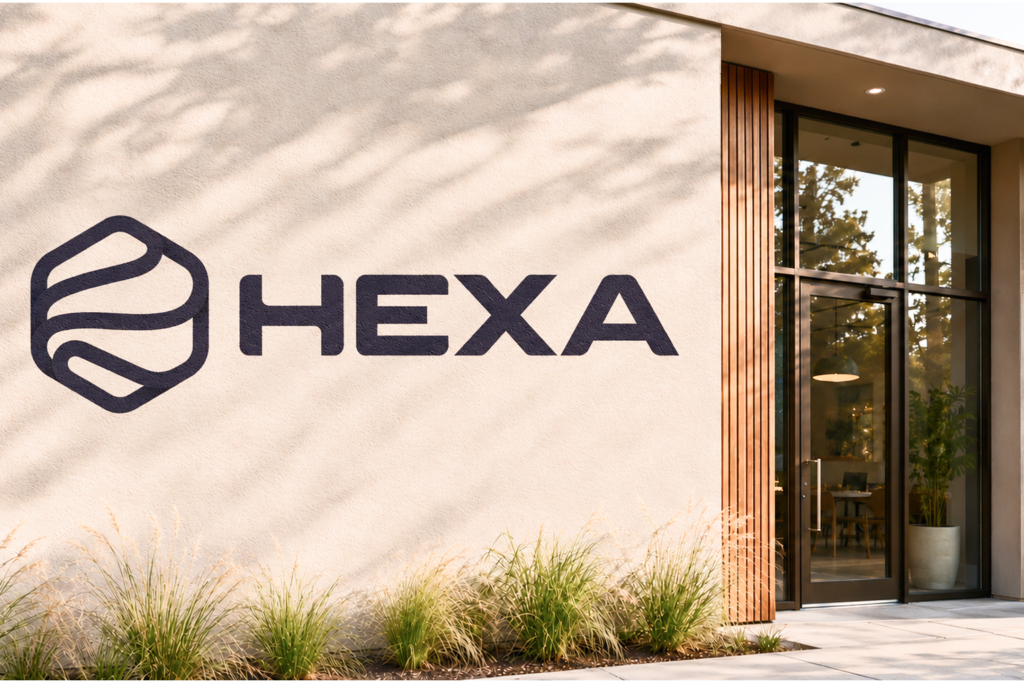
If you only work in one segment, over time you may feel price pressure and growing competition. Wall printing opens the door to new client groups: from hotels and restaurants to schools and companies fitting out offices and shops. There are plenty of uses for wall printing – we cover them in more detail in our article: Wall printing in construction and finishing.
More margin per square metre, not per overtime hour
Pricing is made up of a few clear parts: area, labour time and travel. So what does that look like in numbers? Ink costs around PLN 20 per square metre, while the average market price for the service is around PLN 300 net per m². How much of that you keep depends on your region, the season and your marketing.
Want the details? See how to work out profitability in our article: How much can you earn from wall printing?
Feeling burned out is a signal to change
If you recognise yourself in these signs, don’t jump to conclusions. Running a business is still for you. Your body is simply telling you, loud and clear, that your current way of working has run its course.
Look after yourself, and if you feel you need it, talk to a professional. Then, once you’ve got a bit of breathing space, take a step back and look at your business. Does your income depend mainly on you being on site? Does it rely on one type of job and a season that doesn’t last all year? If so, it’s worth seeing whether you can shape your offer and your daily work differently.
This is where wall printing really shows its strengths. It lets you:
- free up your time – a single person can handle jobs efficiently,
- open new doors – reach clients you couldn’t reach before,
- get work outside the renovation season – earn a steady margin all 12 months of the year,
- give your team a fresh boost – grow yourself and your crew with modern technology.
Before you decide, though, look at your local market, run the numbers and think about how a service like this would fit with what you offer now.
And if you want to see how wall printing technology turns into a real business, watch this video on YouTube.
Got questions? Just ask – we’d love to hear from you.
FAQ - contractor burnout
Burnout can show up as growing irritation with clients, struggling to switch off from work and taking on more jobs for fear of a slow patch. Other warning signs include covering for missing staff, working weekends at the expense of family time and exhaustion that has become the norm. These signs don't mean you need to close your business. They may mean your current way of working needs to change.
Yes, very much so. The owner of a finishing business often wears several hats at once: tradesperson, manager, salesperson and the one responsible for the finances. Seasonality, fixed costs, staffing problems and a business that depends on the owner being there all add to the pressure. In that situation, more jobs don't always mean more independence – they can mean more calls, more decisions and more work. That's when it's worth rethinking how you work.
Not always. Rest helps you get your strength back, but it doesn't change what's overloading you. If you come back to the same overtime, backlog and responsibility for every part of the business, the exhaustion can quickly return. So it's also worth looking at your business model, your income sources and the tasks you could hand over to others.
Yes – it can be an add-on service and a second income stream. Wall printing jobs can be done by one person, including outside the renovation season, for hotels, restaurants, offices, shops and service businesses. Before taking on the service, look at your local market, run the numbers and work out how to fit it into your current offer. We teach sales and marketing in our course and training, and our technical support team helps with the equipment.
Not sure if this business is for you? Want to know the details or get started right away?
Discover the collaboration opportunities available to you and learn how to get started—even if you lack capital, a business of your own, experience, or prior knowledge. We will teach you everything.
See more
Blog
Explore our resources
Have a look through our knowledge base. We’ve put together articles, videos and answers to the questions people ask most before getting into wall printing.

Our process
Discover our collaboration process
Take the first step and we’ll do the rest
Send the form and we’ll email you our price list straight away, with all the packages and what’s included. One of our advisers will be in touch within one working day. No hard sell, just answers to your questions.

Your data is safe
Step 1: Choose your location
Step 2: Fill out the form